How to Identify a Badger Sett: A Field Guide for Beginners
Few things in British wildlife watching are as quietly satisfying as crouching at a field edge at dusk and realising the untidy heap of soil in front of you is the doorway to a badger sett. The trouble is that plenty of holes look like setts and aren't, while genuine setts can look like nothing much at all. Learning to read a handful of physical signs takes you from hopeful guesswork to genuine confidence.
Start with the entrance
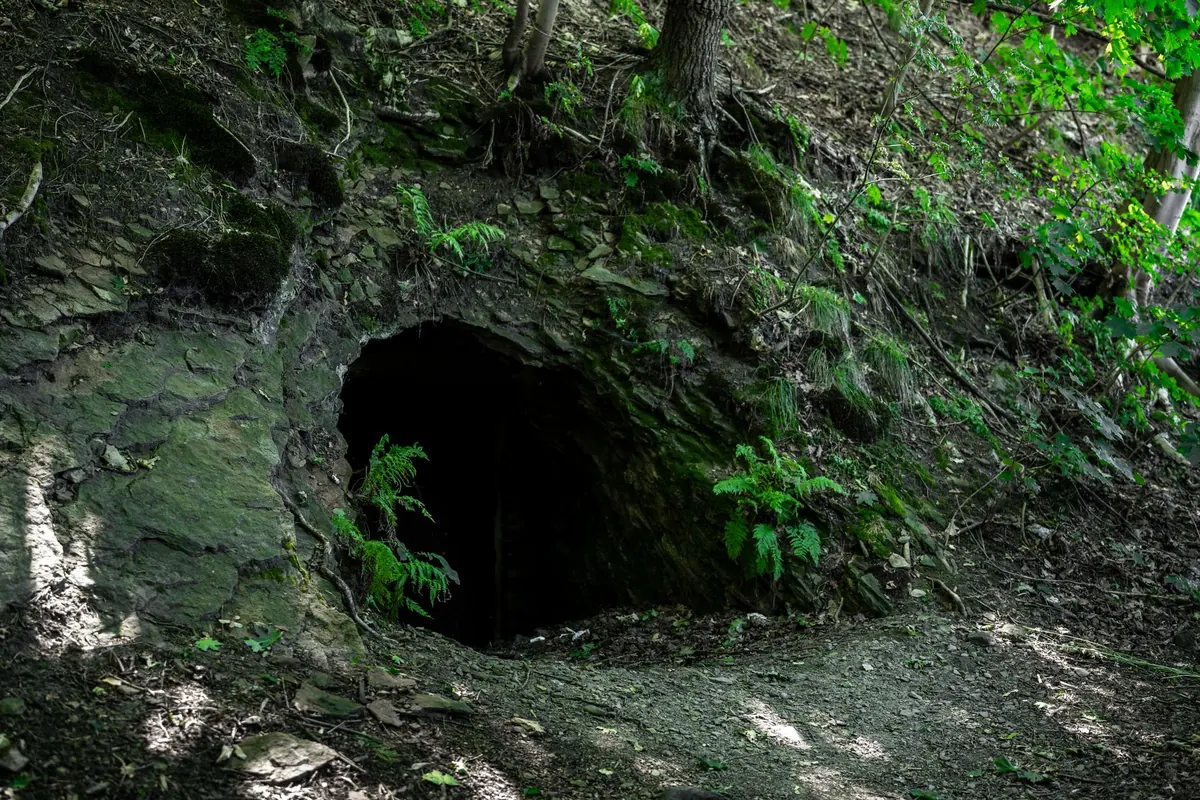
A badger hole has a shape you can learn in a single afternoon. It is typically wider than it is tall, roughly 25 to 30 centimetres across, with a flat, worn bottom and a rounded or slightly arched roof. That D-shape matters, because a badger's body is broad and low-slung and it digs accordingly. Rabbit holes tend to be rounder and narrower; fox earths are usually taller, messier and often smell distinctly foxy.
Look closely at the lower lip of the hole. Years of comings and goings polish the soil and surrounding ground into a smooth, compacted edge, and you can often pick out fine scratch marks at the sides where claws bite into the earth. Entrances usually appear on slopes or banks, under tree roots, along hedgerow banks or at the edges of woodland and pasture.
The spoil heap is your best clue
Badgers are enthusiastic excavators. When they clear or extend a tunnel, they push soil out behind them, and it lands in a fan-shaped heap just outside the entrance.
Fresh spoil is the single most reliable sign of current activity. It is loose, darker than the surrounding soil, and often studded with small stones, roots and clods of earth. You may even make out shallow claw scratches along its surface. A heap that has been there a while will have grass, moss and weeds creeping back over it, and its profile will have slumped.
One caution: not every entrance has a heap right beside it. Badgers sometimes dig gradually over weeks, and rain moves things around. Judge the sett as a whole rather than a single hole.
Latrines, paths and tracks
Badgers are tidy in one particular respect: they use latrines. These are shallow scrapes, usually dug just outside the sett or along a boundary, where dung is deposited repeatedly.
What to look for in a latrine
- Shallow scrapes in the soil, often clustered rather than a single pit.
- Dung that is dark and slimy when fresh, drying to something crumbly and full of seeds and insect remains.
- A noticeable musky smell in warm weather.
- Placement along a path or field margin, marking the edge of a territory.
Then look for the paths themselves. Badgers follow the same routes night after night, wearing narrow, well-trodden tracks through grass and leaf litter between entrances, latrines and foraging areas. A good badger path is around 20 to 30 centimetres wide, quite smooth, and may pass under low fence wires or through gaps beneath hedges.
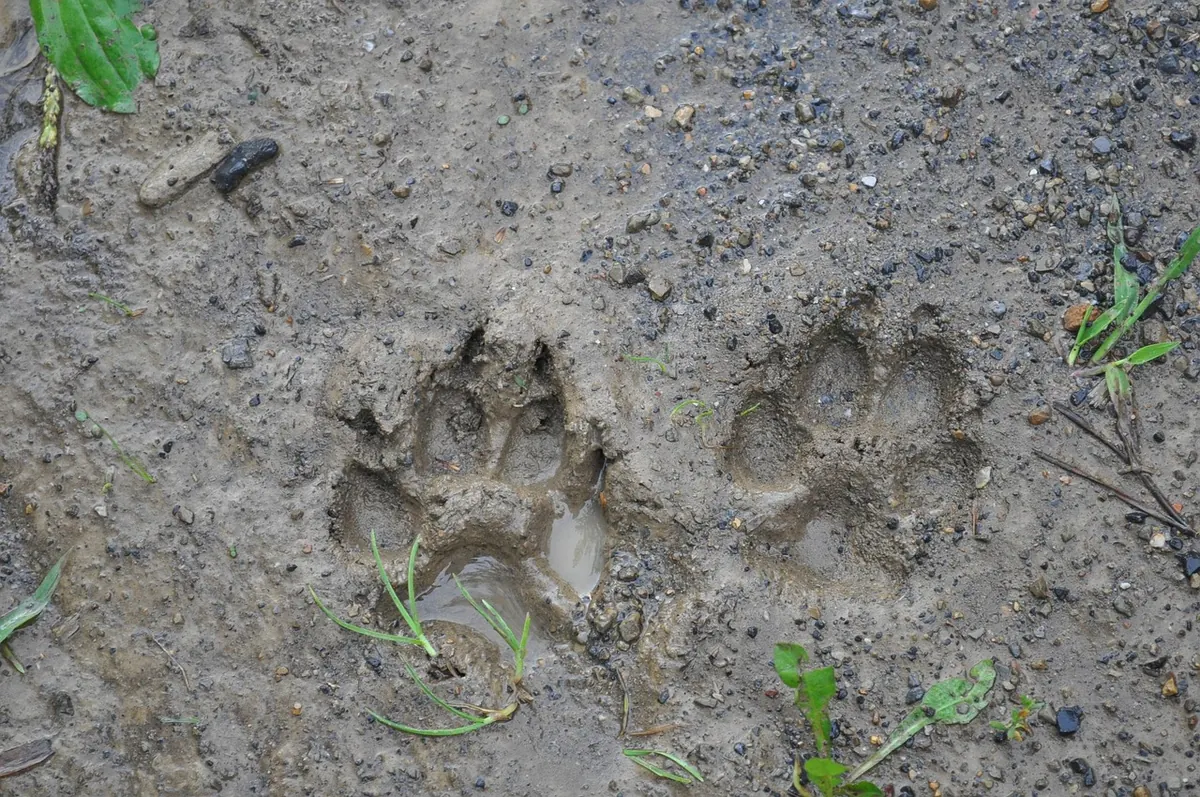
Footprints in soft mud confirm the identity. A badger's front print is broad, with five toes and clear claw marks, and because badgers walk on the whole foot, the print is longer than a neat pad shape.
Other signs worth noting
- Bedding: dry grass, bracken, leaves or straw dragged in and out of entrances. Fresh bedding outside a hole in spring or early summer is a strong sign of use.
- Scratching posts: tree trunks, fence posts and gateposts marked with vertical claw scratches.
- Hairs: coarse black-and-white guard hairs caught on barbed wire or low fence strands.
- Snuffle holes: small conical pits in pasture or lawn where badgers have rooted for earthworms, beetles and wasp nests.
- Dressing floors: worn hollows in the vegetation near entrances where badgers sit and groom.
Is the sett actually active?
Activity is a question of degree rather than a simple yes or no. Very fresh spoil, prints, droppings and new bedding point to a sett in regular use. A hole with cobwebs strung across it, an overgrown entrance or a spoil heap softened by years of grass growth is probably unused, at least for now.
Badgers move around. A large sett often has several kinds of hole: a main sett with many entrances and well-worn paths, occupied throughout the year; annexes close by, used on and off; subsidiary setts with a handful of entrances; and outliers, one or two holes that may be dug and abandoned within a season. Judging a sett from a single visit can mislead you, so return at different times of day and in different weather.
Watching well, and staying within the law
Badgers and their setts are protected in the UK. It is an offence to damage, destroy or obstruct a sett, and disturbing badgers can also be an offence. That means no digging, no blocking, widening or clearing entrances, no pushing sticks or cameras down holes, and no letting dogs investigate. If you think a sett is at risk from planned works, report it and take advice before anything happens — your local wildlife trust or the relevant statutory conservation body can point you in the right direction.
For watching, the routine is straightforward. Arrive well before dusk, position yourself downwind and at a respectful distance, sit still and keep talking to a minimum. A red filter on a torch lets you see without spooking animals, and binoculars help you keep your distance. Leave gates as you found them and don't return to the same sett night after night.
Once you know the signs — the D-shaped hole, the fresh fan of soil, the little latrine scrapes and the worn path threading between them — you will start finding setts in places you have walked past for years. That is the real reward: not simply seeing a badger, but reading the landscape well enough to know it is there before it appears.
Photo: Beeki / Pixabay
You Might Also Like
A practical, humane guide to fencing, gates, buried mesh and non-harmful deterrents that protect your garden boundary while respecting protected badgers.
Most badger cubs found alone are not orphaned. Here is how to tell when a cub genuinely needs help, why you should not handle it, and who to call.